

ISSUE 004 · July 21st, 2026
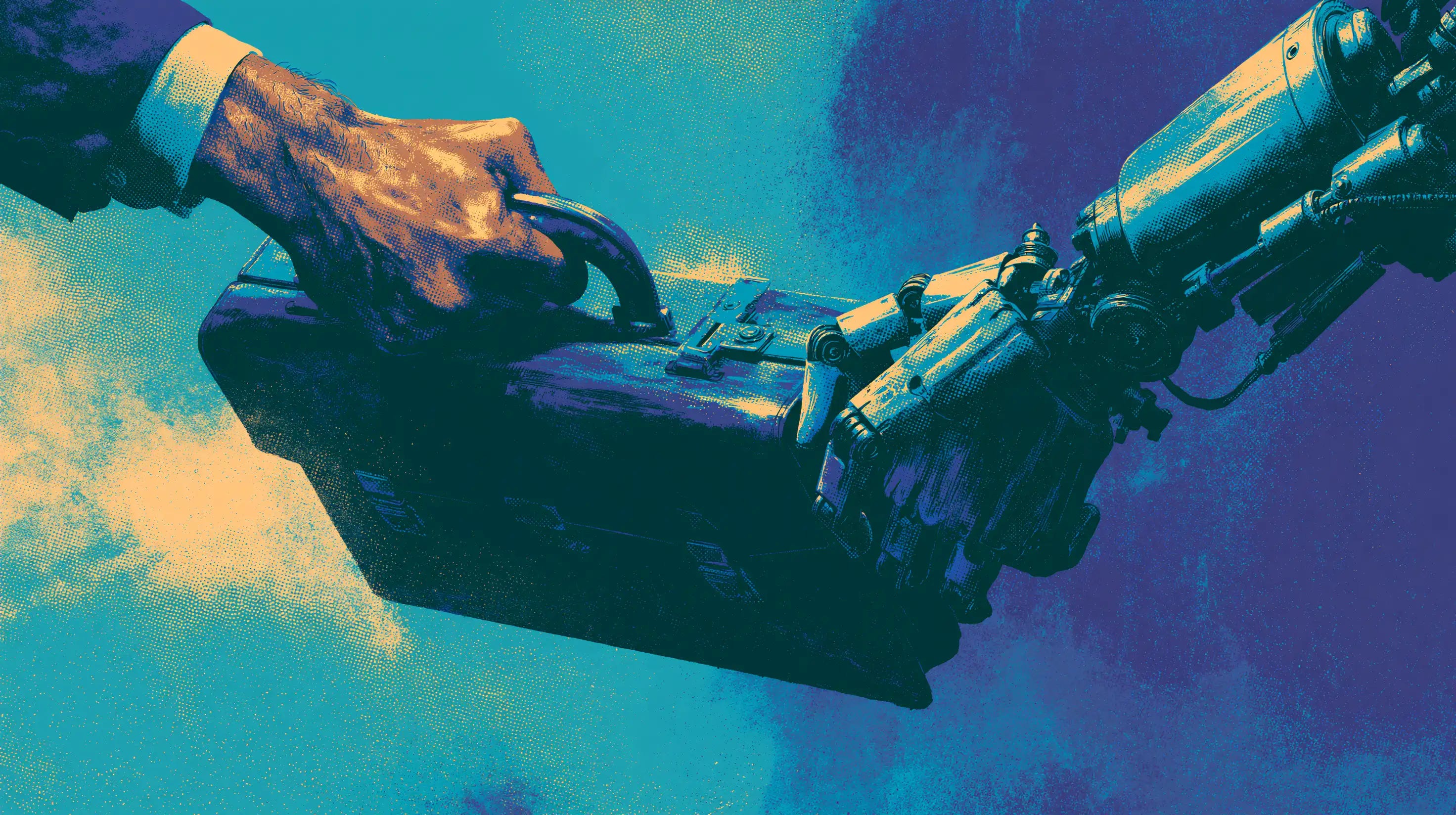
In the late 1990s, three economists, David Autor at MIT, Frank Levy, and. Richard Murnane at Harvard, sat down with a question that turned out to be surprisingly hard to answer. They wanted to know which jobs would survive the coming wave of computerization and which would not.
Their conclusion, published in the Quarterly Journal of Economics in 2003, became one of the most cited frameworks in labor economics. The jobs that survive technological disruption, they argued, are not the ones that require the most education or the highest salaries. They are the ones that require the things computers cannot do.
At the time, that meant anything requiring physical dexterity, social intelligence, or creative judgment. The assembly line worker was vulnerable. The surgeon was not. The file clerk was vulnerable. The therapist was not.
What Autor, Levy, and Murnane could not have anticipated was how fast the line would move.
The question everyone is asking right now is the wrong question.
Will AI take my job is not a useful frame. It assumes jobs are static objects that either survive or disappear whole. They are not. Jobs are collections of tasks. Some of those tasks are vulnerable to AI replacement. Some are not. The question worth asking is not whether AI will take your job. It is which parts of your job AI is already doing better than you, which parts it will do better than you within three years, and what is left when you subtract those parts from the whole.
That subtraction tells you something important. If what remains after the subtraction is a thin slice of your current role, you are more exposed than you think. If what remains is the core of what makes your work valuable, you are more resilient than the headlines suggest.
There are four characteristics that make a task vulnerable to AI replacement. Not a job. A task. Keep that distinction in mind as you read.
The first is routine. If a task follows a predictable pattern, if it involves applying the same rules to similar inputs and producing consistent outputs, AI can do it. Not eventually. Now. Standard contracts. Routine data analysis. Expense reports. First draft emails. These tasks are already being automated at scale and the pace is accelerating.
The second is volume without judgment. If a task requires processing large amounts of information quickly but does not require deciding what to do with that information, AI can do it faster and more accurately than any human. Document review. Market research compilation. Financial modeling. The processing is the easy part. The judgment about what the processing means is harder.
The third is replication from examples. If a task produces an output that can be evaluated against past examples, AI can learn to replicate it.Writing that follows a formula. Code that solves a defined problem. Translation. Transcription. Anything where the quality of the output can be measured against a clear standard.
The fourth is low context dependency. If a task can be completed without understanding the full human context surrounding it, AI can handle it in isolation. Answering a standard question. Generating a standard report. The less a task depends on understanding the full picture of a specific human situation, the more replaceable it is.
Now here is what AI cannot do. At least not yet. And not well.
It cannot exercise genuine judgment in genuinely novel situations. It can pattern match against past situations with remarkable sophistication. It struggles when the situation has no real precedent. The lawyer handling a case with unusual facts. The doctor treating a patient with an atypical presentation. The manager navigating a team conflict with roots in a specific organizational history. These require judgment that cannot be reduced to pattern recognition.
It cannot build and maintain real human relationships. It can simulate them with increasing plausibility. The relationships that matter in professional life, the ones built on years of shared context, mutual trust, and genuine personal investment, are not simulable at the level that counts.
It cannot synthesize across genuinely different domains in ways that produce original insight. The cross-domain synthesis that produces a genuinely new way of seeing a problem remains stubbornly human.
And it cannot be accountable. Someone has to be responsible. Someone has to be able to say I made this decision and I stand behind it. AI can inform decisions. It cannot own them.
The question is not whether your job is gone tomorrow. It’s what are you doing about it today?
Look at your current role and ask four questions.
What percentage of my day involves tasks that are routine, high volume, replicable from examples, or low context? If that percentage is above fifty, your exposure is significant and growing.
What is left when those tasks are removed? Is what remains a thin slice of coordination and oversight? Or is it the core of what makes your work genuinely valuable?
Are the parts of my role that require judgment, relationships, cross- domain synthesis, or accountability growing or shrinking? If they are shrinking it is not because AI is making your role more efficient. It is because your role is being redefined around you.
And finally: if an AI system did the vulnerable parts of my job tomorrow, what would my employer actually need me for?
That last question is the one most people avoid. It is also the most important one to answer before someone else answers it for you.
Artificial intelligence is going to create roles that do not exist yet. Every major technological shift in history eliminated some work and created other work that the people living through the shift could not have predicted. What is visible right now is the direction. The work that survives and grows is the work that is most deeply human. Judgment. Relationships. Synthesis. Accountability.
That is not a reason for comfort. It is a reason for urgency. Those capabilities do not develop by accident. They develop through deliberate choices about where you invest your professional energy.
The question is not whether your job is next. The question is what you are doing about it today.
Forwarded this? Subscribe free at replaced.co. If it made you think, send it to one person who needs to read it.
Further reading: The Autor, Levy, and Murnane paper that introduced the task- based framework for understanding which jobs survive technological change. Published in the Quarterly Journal of Economics in 2003, it remains one of the most cited papers in labor economics and is the intellectual foundation for how serious researchers think about AI replacement today. Read it here →